
Support
Resource Centre
Resource Centre
Understanding how skin-benefitting ingredients actually work inside a glove
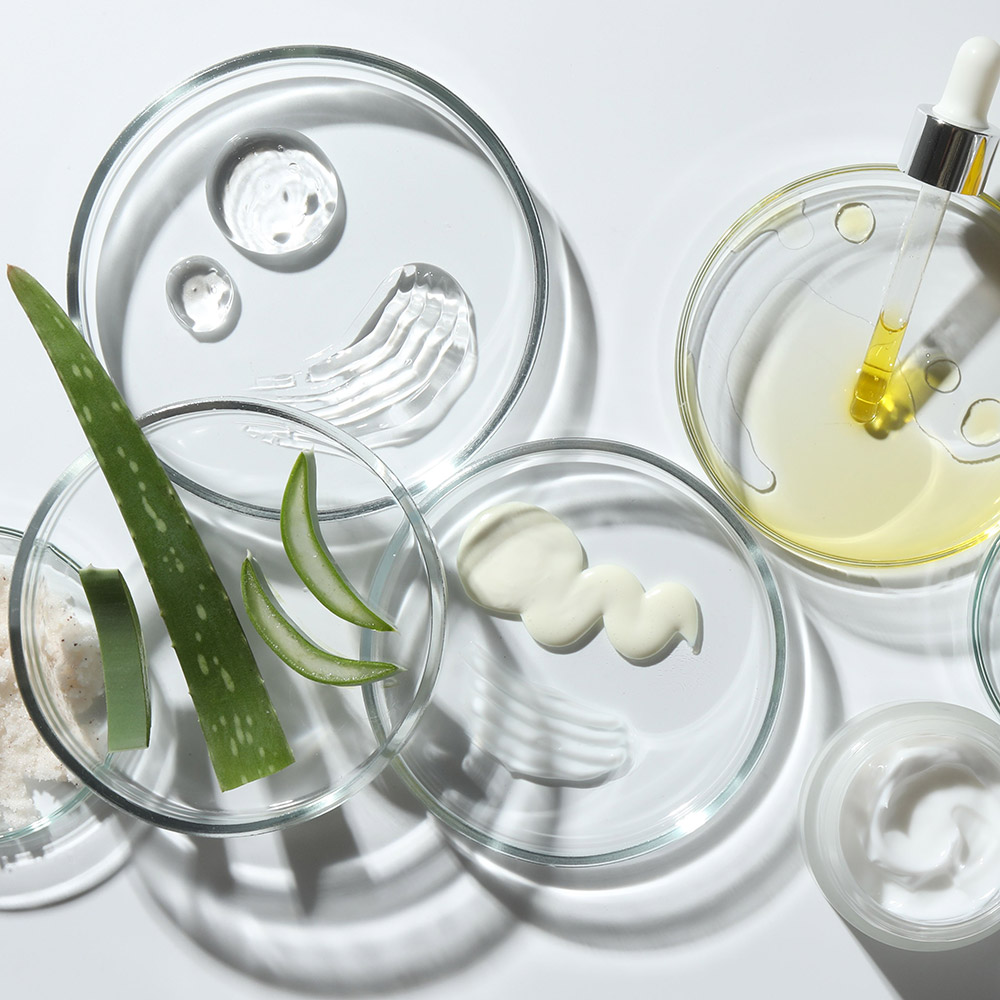
The skin science behind a smarter glove coating — and why your hands deserve better than plain nitrile.
Your gloves are on for eight hours.
Your skin didn’t get a say in that.
Repeated glove wear does something invisible but measurable: it strips away the Natural Moisturising Factors (NMF) your skin depends on, disrupts the skin acid mantle that guards against harmful microbes, and traps heat in a closed environment that accelerates perspiration. For anyone who gloves up daily, the result is familiar, tight, dry, red, reactive skin by end of shift. A problem that hand cream can patch, but never prevent.
That’s the gap that skin-benefitting gloves coated with active chemical ingredients are designed to close. But not all with active ingredients are equal, and the ingredient story matters more than most brands admit. Knowing an ingredient is “good for skin” is only half the story. The more important question and the one most brands sidestep is how that ingredient gets from the glove coating to your skin, how fast it works, and whether the glove environment helps or hinders that transfer. The answer depends on three interrelated factors: the nature of the ingredient itself, the method used to add it into the glove, and the physiological changes that happen to your skin the moment you put the glove on. The best skin-benefitting gloves don’t just add a feel-good ‘idea’, they actively work with your skin’s biology during the hours you wear them.
The Glove as an Accidental Delivery System
A glove does more than simply cover the skin. Once worn for extended periods, it creates a warm, humid occlusive environment that changes how the skin behaves. Normally, the skin slowly loses water to the surrounding air through a process called trans epidermal water loss (TEWL). Inside a glove, the occlusive environment interferes with the trans epidermal water loss (TEWL) process and the moisture and body heat become trapped. Most people recognise this as the familiar “hot and sweaty” feeling after hours of glove use, in fact, it’s actually your skin becoming more receptive to absorbing things. As humidity builds up, the outer layer of the skin softens and swells slightly, making it easier for coated ingredients to move from the glove surface onto the skin.
This is actually the same principle used in medical occlusive dressings, where covering the skin helps topical treatments work more effectively. In skin-benefitting gloves, manufacturers attempt to use this natural glove environment to support ingredient transfer during wear.
The catch? This only benefits you if the glove’s skin-care ingredient is designed to take advantage of that delivery window.
How the Ingredients Are Added to the Glove and Why it Matters?
Incorporating the ingredients through mixing them with the glove rubber compound sounds efficient and it is, for the factory. But the problem is that making a glove involves crosslinking of rubber at extreme heat (above 100°C), and many natural ingredients such as plant extracts, proteins, botanical actives simply don’t survive that process intact. On top of that, some ingredients have functional groups that can chemically interfere with the rubber-making process itself, weakening the glove’s mechanical strength and elasticity. Furthermore, as the ingredients are spread throughout the entire glove material, some of the ingredients inevitably migrate to the outer surface where they do does nothing for your skin and may actually affect grip.
Applying the ingredients as an inner coating of the glove avoids all these problems. The glove is made first, then the active ingredients are is applied only to the skin-contacting surface (donning surface) of the completed glove, keeping them precisely where needed and avoiding the excessive heat and chemical reactions of the manufacturing process. The challenge here is making sure the coating is evenly distributed, stays dry and only releases onto the skin when the glove is worn.
Why some ingredients transfer better than others?
Not all skin-care ingredients move through skin the same way or at all. The single biggest factor is the molecular size of the ingredient. Research shows that for an ingredient to pass through the skin’s outer layer rather than just sit on top of it, it needs to be small: under 500 Daltons (Da) in molecular weight, roughly the size of a small vitamin molecule.
This matters enormously when evaluating what a “skin-benefitting” glove actually delivers. A coating that consists only large molecules such as a plant polysaccharide or a high-molecular-weight protein usually remain closer to the skin surface and work more by forming a temporary protective layer, but it won’t penetrate through the skin layer. A coating with small or in technical term, low molecular weight, water-soluble ingredients tend to transfer more easily because the humid glove environment mobilises them quickly.
This is why two gloves may both claim to contain “skin-benefitting ingredients” but still perform very differently during wear.
How fast does each ingredient actually work?
Transfer speed is how quickly an ingredient moves from the glove coating to your skin. It depends on three things: how big the molecule is, whether it dissolves in water, and what triggers its release. The table below maps all the reported skin benefitting ingredients against those factors.
| Ingredient | Molecular Weight (MW) / Solubility | Transfer Speed | Mechanism |
|---|---|---|---|
| Urea | 60 Da — highly water-soluble | Fast | Dissolves into skin moisture upon donning. NMF-identical — skin absorbs it readily. Keratolytic at higher percentage; humectant at low percentage. |
| Dipotassium Glycyrrhizate (DPG) | ~899 Da — water-soluble salt | Fast (surface) | Dissolves in skin moisture upon donning. Acts on the skin surface (confirmed non-penetrating by CIR receptor chamber testing). Inhibits hyaluronidase enzyme, preserving the skin’s own hyaluronic acid (91.8% HA protection shown at 0.1%). Inhibits release of histamine, leukotrienes, and prostaglandins; a non-steroidal anti-inflammatory mechanism comparable to corticosteroids. |
| Colloidal Oatmeal | High MW — dry powder; avenanthramides <500 Da | Moderate | β-glucan and starches form an occlusive, water-binding film on the stratum corneum surface. Partial stratum corneum penetration (<500 Da). Avenanthramides is a validated anti-inflammatory agent. |
| Aloe Vera (freeze-dried) | MW: 20–2,000 kDa (varies by plant subspecies and processing method — not a fixed value) | Moderate | Mucopolysaccharides help to bind moisture into the skin. Forms a surface soothing film. Depth of penetration depends on molecular weight (<300 kDa) of the specific processed polysaccharide. |
| Tremella Polysaccharides | MW: 25,722–177,263 Da. Average MW over 1,000,000 Da cited by some suppliers | Moderate | Chemically modified polysaccharides can be effective in mitigating the loss of hydroxyproline and hyaluronic acid in the skin. Medium MW Tremella Polysaccharides (4.68 × 10⁶ Da) exhibit superior efficacy in delaying skin aging, reducing oxidative stress and providing anti-inflammatory benefits. |
| Silk Sericin (protein) | In glove coating application: 37kDa–97kDa ; General sericin literature reports 10–400 kDa | Slow | Forms NMF-simulant surface film on the epidermis via hydrogen bonding to skin keratin (serine-rich structure facilitates this bonding). Sericin has been shown in an in vivo study to reduce TEWL and improve skin impedance. |
| Lanolin + Vitamin E | Complex wax mixture (~200+ compounds) — lipophilic | Moderate (occlusive) | Softens with body heat under glove occlusion. Spreads as an emollient layer that penetrates the stratum corneum. Creates an occlusive barrier reducing TEWL Vitamin E (tocopherol, ~430 Da) provides antioxidant support via the lipid pathway. |
| Hyaluronic Acid (HA) | Highly MW-dependent — 20 kDa to 2,000 kDa in cosmetic use. | MW-dependent | Efficacy is entirely dependent on molecular weight: High – impermeable to the stratum corneum and remains on the surface forming a hydrating film; Low – passes through the stratum corneum and penetrates into the epidermis. |
Advantage and weakness: what the ingredient nature tells you
The transfer table above reveals a pattern that most marketing does not.
Small, water-soluble molecules — urea (60 Da), DPG (~899 Da) — transfer quickly, because the occlusion-driven moisture environment activates them immediately on donning. They just dissolve and act. They don’t require heat-induced phase change, reconstitution, or protein refolding.
Large polysaccharides — Tremella, aloe vera, high-MW HA — remain on the surface, which is adequate for a moisture-retention film but limits any deeper biological action. They may face surface films wash off: repeated handwashing may remove moisturising agents, potentially diminishing the benefits provided by the gloves.
Protein-based coatings — sericin — face the most structurally complex delivery challenge. Proteins rely on tertiary structure for function, and the warm, moist occlusive environment of a glove can denature that structure before it reaches the skin.
Risks and Considerations
Regardless of whether a skin-benefitting ingredient is applied as a surface coating or embedded within the glove compound, manufacturers must carefully manage a set of risks that do not exist with any uncoated gloves.
-
1
Microbial growth — the most underreported risk
The warm, moist microenvironment inside a worn glove is not only favourable for ingredient activation, it is also favourable for microbial growth. Prolonged glove occlusion can affect the skin’s microbiome: the elevated skin pH and temperature can disrupt the balance of resident microorganisms.
The risk operates on two levels.
At the manufacturing stage: bacterial contamination can begin during the manufacturing of the gloves with contaminants introduced via process water or flawed glove manufacturing processes. When a coating is added to the inner surface, it creates a nutrient-rich substrate that is not present in a any uncoated glove. Under storage condition that favour microbial growth, such as high humidity, the microbial contamination may amplify.
Occlusion at the wear stage: Occlusion can raise the surface skin pH and favour the growth of Staphylococcus aureus and Streptococcus pyogenes. Warmer, more humid regions support Gram-negative bacilli and coryneforms.. Research on analogous occlusive environments — face masks during the COVID-19 pandemic — found that the moist and warm environment favoured the growth of dermatoses-associated Staphylococcus and Corynebacterium, and increased susceptibility to Candida and Malassezia fungal infections. Glove occlusion creates identical conditions on the hand.
-
2
Skin sensitisation and allergic reactions
The introduction of a glove coating may inadvertently create a new sensitisation pathway that does not exist with an uncoated glove. Paradoxically, the very individuals most likely to benefit from a moisturising glove are also likely to develop sensitisation under repeated occlusive exposure. This risk can be ingredient-specific or the glove inefficient leaching process before a skin-benefitting coating is applied.
-
3
Inconsistent ingredient release
A coating that delivers too little provides no benefit. A coating that delivers too much may cause unwanted effects. Variations in activation stimuli among individuals must be taken into account to ensure consistent efficacy. Skin temperature, sweat rate, pH, and baseline hydration all vary between individuals and across a single day, meaning the same glove coating may activate very differently on a calm office-based worker versus a factory worker under procedural or environmental related stress.
What This Means for the Glove You Choose
None of this makes a skin-benefitting glove a gimmick, but it does make “skin-benefitting” a claim worth interrogating rather than trusting it on faith. Whether skin-benefitting ingredients can deliver their intended effect depends on several critical factors: the ingredient’s molecular weight and its ability to reach the skin. The manufacturing method process and its ability to preserve the functionality of the ingredients and the occlusive environment that determines how the ingredients interact with the skin during wear. A glove that gets all three right can genuinely offset the moisture loss and barrier disruption associated with prolonged glove use. For anyone gloved up for a living, that’s the real question to ask a supplier: not “does the glove contain skin-benefitting ingredients,” but “can you provide scientific evidence that these ingredients remain active and reach the skin, and provide measurable skin benefits without compromising safety or hygiene?